



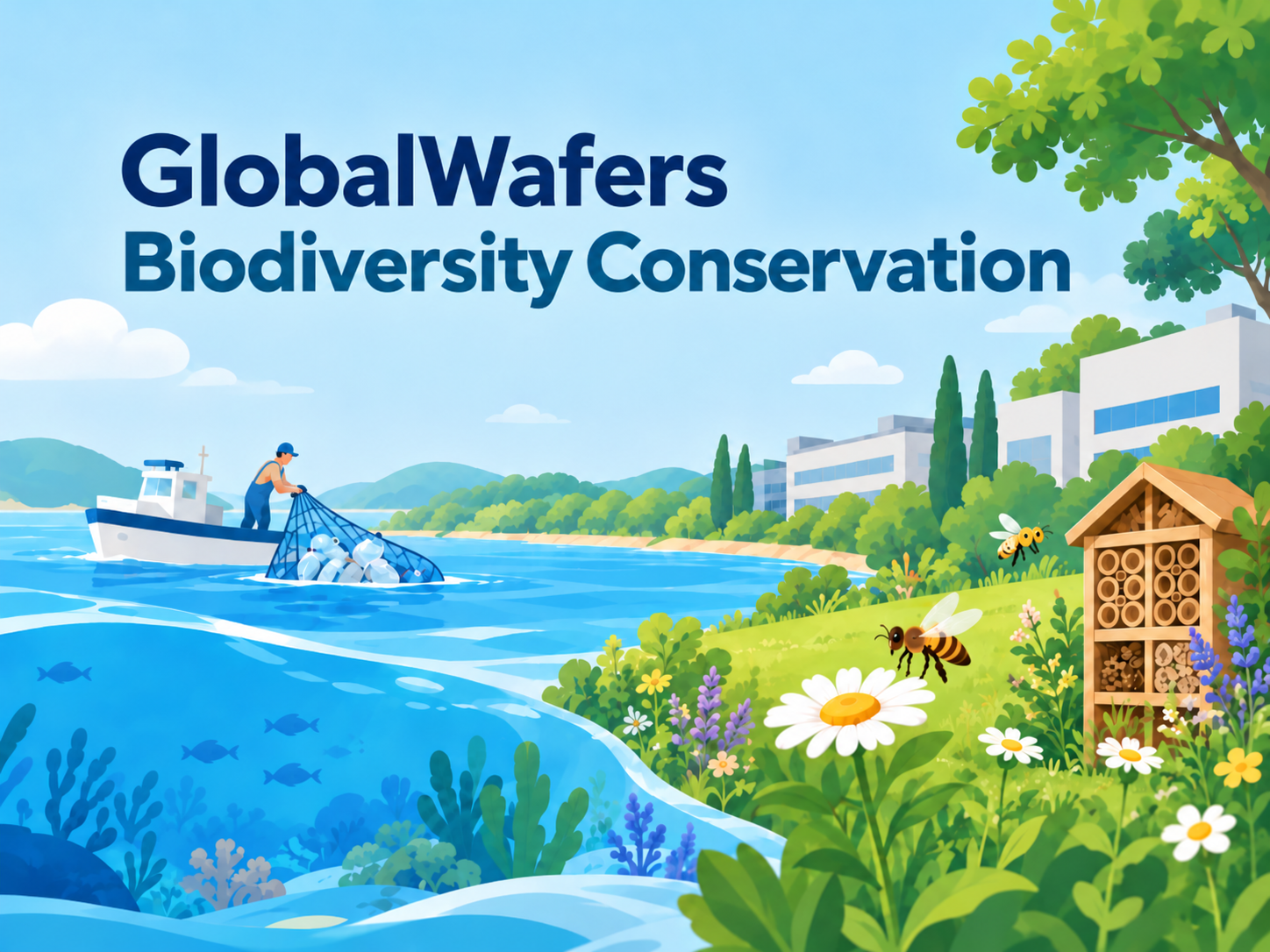
Biodiversity is an important foundation for maintaining ecosystem stability and environmental resilience, and is closely linked to climate regulation, water resources, and human well-being. GlobalWafers continues to implement its Corporate Sustainability Policy and Sustainability Strategy Blueprint by integrating biodiversity conservation into environmental sustainability management. In line with the natural conditions and local needs of its global operations, GlobalWafers continues to explore ways for business operations and nature to coexist and thrive, from reducing ecological impacts to advancing conservation initiatives.
GlobalWafers’ Italian subsidiary, MEMC Electronic Materials S.p.A. has undertaken a range of initiatives spanning the ocean, manufacturing sites, and urban green spaces, covering marine ecosystem conservation, pollinator protection, digital monitoring, and urban habitat creation. By extending biodiversity conservation to surrounding communities, GlobalWafers continues to create measurable environmental benefits, enhance ecosystem resilience, and generate positive value for the local natural environment.
Protecting Marine Ecosystems and Returning Waste to the Resource Cycle
The ocean supports rich biodiversity and plays an essential role in climate regulation and human well-being. However, marine and coastal waste continues to place pressure on species and habitats. Reducing pollution and preventing waste from re-entering the natural environment are therefore important aspects of marine conservation.
Since August 2024, GlobalWafers’ Italian subsidiary has partnered with international marine conservation organization Ogyre, working with local fishing communities in Italy, Brazil, Indonesia, and Senegal to recover marine and coastal waste. The partnership not only helps reduce marine pollution and protect vulnerable habitats, but also supports sustainable livelihoods and community development through local participation, balancing environmental and social values.
Each June, initiatives such as World Oceans Day bring greater international attention to marine conservation and help raise public awareness of ocean-related issues. In June 2026, GlobalWafers participated in the Ogyre Ocean Challenge for the second consecutive year, recovering more than 400 kilograms of marine and coastal waste during the month. As of July 2026, more than 7,000 kilograms had been recovered since the partnership began, with continued progress toward the long-term goal of collecting 15 metric tons by mid-2028.
Recovered waste is sorted according to material type and recyclability. Recyclable materials such as plastics can be transformed into textiles, furniture, or industrial materials, allowing resources to re-enter the circular economy. Non-recyclable materials are properly treated and disposed of in accordance with applicable requirements. By removing marine waste and reducing the risk of microplastics entering the environment, the initiative continues to expand its marine conservation benefits.
In addition, every kilogram of recovered waste is tracked, quantified, and certified through Ogyre’s digital system, providing transparency and traceability for the program’s results. From pollution reduction and resource circularity to community participation, these efforts also support SDG 14, Life Below Water, particularly its goals of reducing marine pollution and protecting marine and coastal ecosystems.
For more information, please visit the dedicated project page: Ogyre x GlobalWafers – MEMC

Creating Pollinator-Friendly Habitats at Manufacturing Sites
Pollinators play an important role in plant reproduction, maintaining ecosystem health, and global food security. To support pollinator habitats and reproduction, GlobalWafers continues to implement beekeeping, digital monitoring, and habitat creation initiatives at its Novara and Merano sites in Italy, enabling manufacturing sites to contribute to local biodiversity.
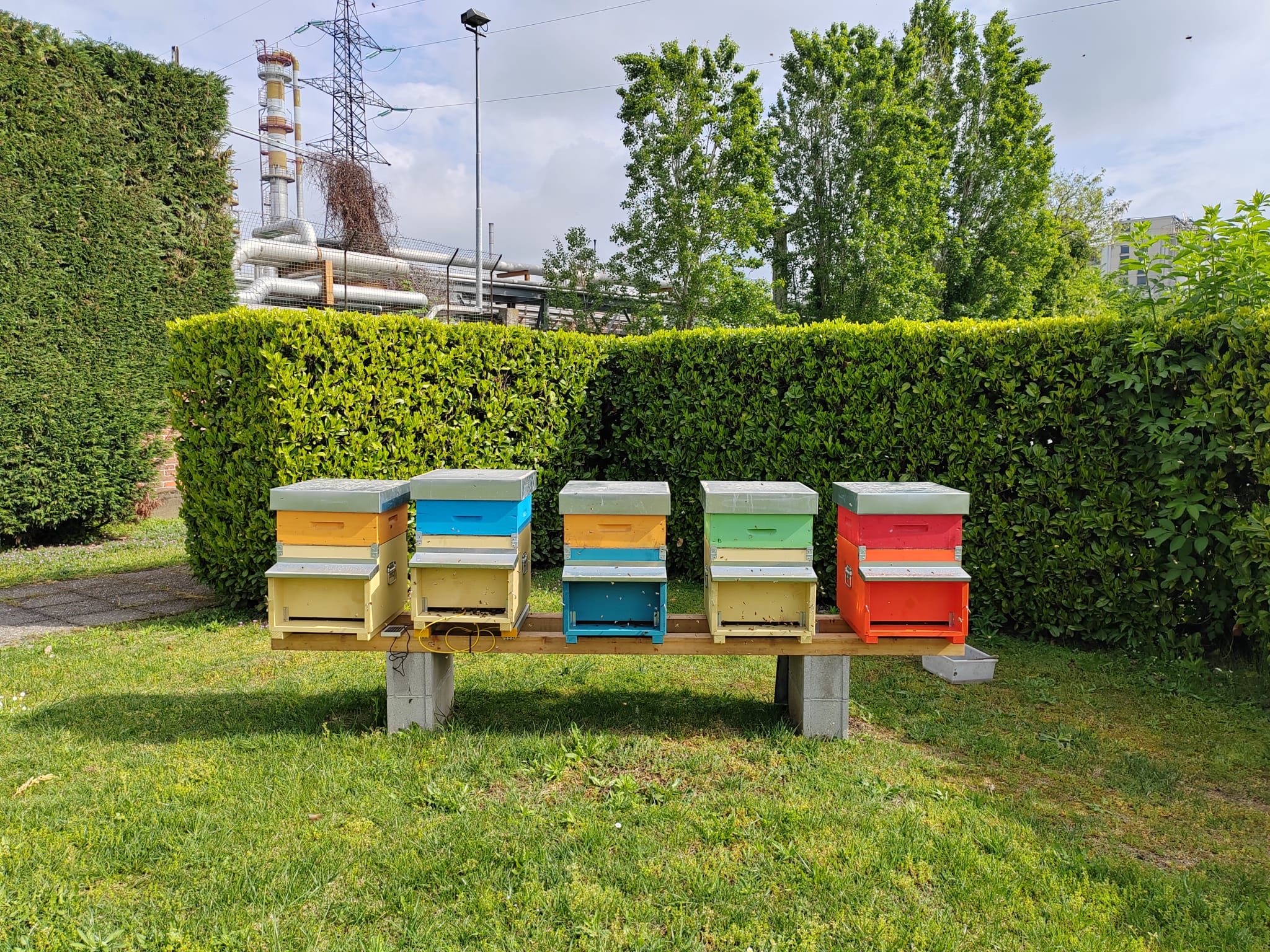
In 2026, GlobalWafers further expanded its corporate beekeeping program. The two sites in Italy currently host a total of 10 beehives equipped with the HiveTech digital hive monitoring system. Sensors continuously track key indicators such as temperature, humidity, hive weight, and colony activity. The data can be transmitted in real time to a digital platform for analysis, helping monitor colony health and seasonal changes while reducing the frequency of manual inspections and disturbance to the bees. This enables conservation activities to gradually move toward a more scientific and data-driven management approach.
Beyond managed honeybees, GlobalWafers’ Italian subsidiary has also extended its conservation efforts to solitary bees, bumblebees, butterflies, and other wild pollinators. A total of five insect hotels have been installed across the two sites to provide spaces for nesting, resting, and reproduction. Particularly in industrial and urban environments where natural habitats are relatively limited, these small-scale ecological facilities help increase available habitats and create a more pollinator-friendly living environment.
Environmental education materials have also been placed near the insect hotels to help employees better understand the importance of pollinators and biodiversity. In this way, habitat enhancement also serves as an opportunity to strengthen environmental awareness and participation. These initiatives support SDG 15, Life on Land, particularly its focus on ecosystem protection, habitat improvement, and halting biodiversity loss.
Extending Biodiversity Action into Cities and Bringing Nature into Urban Environments
Biodiversity conservation should not be limited to corporate sites. Through cross-sector collaboration, conservation efforts can extend into surrounding communities and urban environments, further expanding the positive impact on nature conservation.
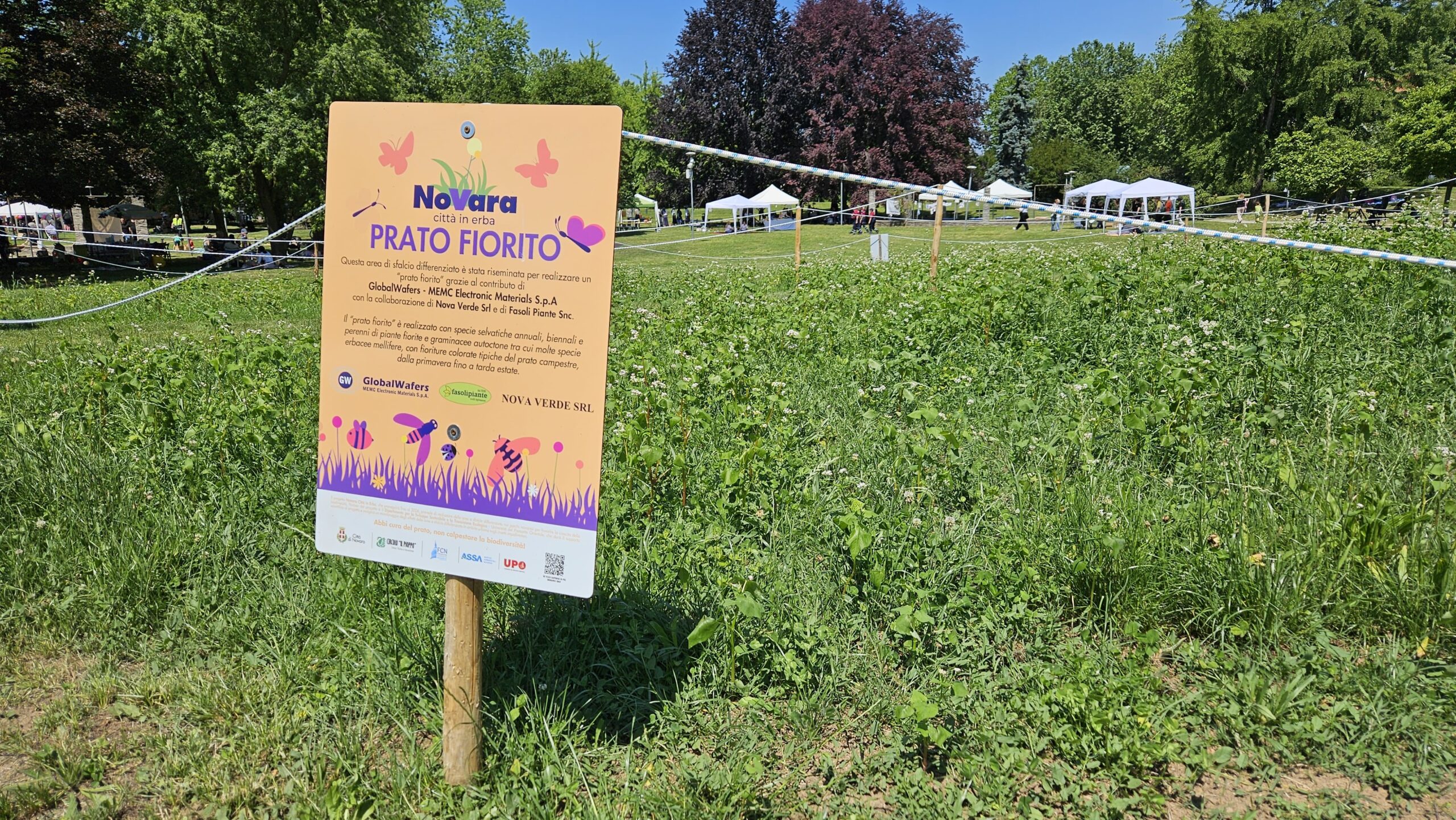
Since January 2026, GlobalWafers has participated in the Novara City in Green initiative promoted by the Municipality of Novara in Italy. Through more ecologically friendly green-space management practices, the initiative increases urban habitats, enhances ecosystem resilience, and strengthens the city’s ability to adapt to climate change.
GlobalWafers currently provides funding and sponsors maintenance activities to support differentiated mowing practices across three local urban green spaces. By reducing frequent mowing, native flowering plants are able to complete their growth, flowering, and seed-setting cycles while continuing to provide food sources for pollinators throughout the growing season. Nectar-rich plants have also been added to these green spaces to further enhance plant and habitat diversity.
To evaluate the effectiveness of these measures, biodiversity monitoring in the relevant areas is conducted by the University of Eastern Piedmont, with ongoing observation of pollinator populations and ecological changes. This allows urban green-space management to go beyond greening and use scientific monitoring to assess long-term ecological benefits.
Compared with conventional high-frequency green-space maintenance, this nature-based management approach not only helps increase habitat diversity, but can also reduce fuel consumption associated with mowing as well as irrigation and fertilizer use. It can also improve soil fertility, enhance carbon sequestration and the absorption of air pollutants, help mitigate the urban heat island effect, and create richer habitats for pollinators, birds, and other wildlife.
These efforts also support SDG 11, Sustainable Cities and Communities, demonstrating how biodiversity conservation can extend from corporate sites into urban environments and how ecologically informed management can better integrate nature into everyday city and community life.
From Local Action to Nature-Positive Outcomes: Responding to Global Biodiversity Trends
As nature-related risks receive increasing attention, biodiversity has evolved from a traditional environmental conservation issue into an important consideration in corporate risk management and sustainability decision-making.
The Kunming-Montreal Global Biodiversity Framework (GBF) emphasizes that companies should pay greater attention to their dependencies, impacts, and related risks concerning nature, while continuing to reduce negative impacts and increase positive impacts. The Taskforce on Nature-related Financial Disclosures (TNFD) guides companies to understand nature-related risks and opportunities more systematically through governance, strategy, risk and impact management, and metrics and targets. GRI 101: Biodiversity 2024, which became effective in 2026, further raises expectations for corporate attention to biodiversity impacts, management approaches, and information transparency.
GlobalWafers continues to identify biodiversity-sensitive areas and assess operational risks to understand the relationship between its operations and the natural environment. The Company also promotes local conservation initiatives in response to the natural conditions and community needs of different locations. From marine waste recovery and pollinator habitat creation to urban green-space improvement, the practices undertaken by GlobalWafers’ Italian subsidiary demonstrate how biodiversity management can extend from risk identification and impact reduction to cross-sector collaboration and nature conservation.
Looking ahead, GlobalWafers will continue to focus on nature and biodiversity by combining the local practices of its global operations, deepening risk identification, impact management, and ecological conservation, and enhancing ecosystem resilience. Through these efforts, the Company aims to create long-term sustainable value for the natural environment, local communities, and future generations.