



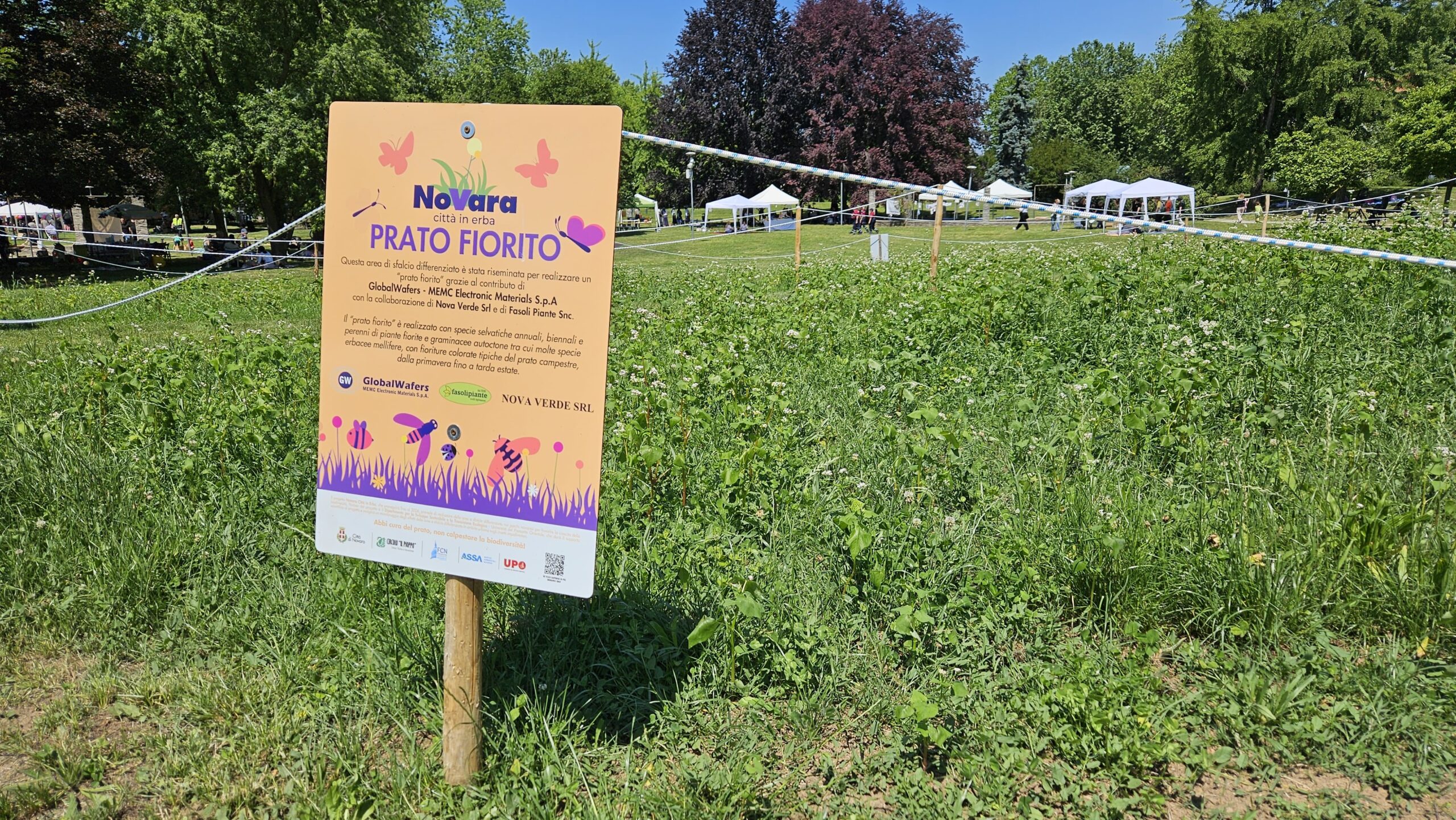
Biodiversity conservation should not be limited to corporate sites. Through cross-sector collaboration, conservation efforts can extend into surrounding communities and urban environments, further expanding the positive impact on nature conservation.
Since January 2026, GlobalWafers has participated in the Novara City in Green initiative promoted by the Municipality of Novara in Italy. Through more ecologically friendly green-space management practices, the initiative increases urban habitats, enhances ecosystem resilience, and strengthens the city’s ability to adapt to climate change.
GlobalWafers currently provides funding and sponsors maintenance activities to support differentiated mowing practices across three local urban green spaces. By reducing frequent mowing, native flowering plants are able to complete their growth, flowering, and seed-setting cycles while continuing to provide food sources for pollinators throughout the growing season. Nectar-rich plants have also been added to these green spaces to further enhance plant and habitat diversity.
To evaluate the effectiveness of these measures, biodiversity monitoring in the relevant areas is conducted by the University of Eastern Piedmont, with ongoing observation of pollinator populations and ecological changes. This allows urban green-space management to go beyond greening and use scientific monitoring to assess long-term ecological benefits.
Compared with conventional high-frequency green-space maintenance, this nature-based management approach not only helps increase habitat diversity, but can also reduce fuel consumption associated with mowing as well as irrigation and fertilizer use. It can also improve soil fertility, enhance carbon sequestration and the absorption of air pollutants, help mitigate the urban heat island effect, and create richer habitats for pollinators, birds, and other wildlife.
These efforts also support SDG 11, Sustainable Cities and Communities, demonstrating how biodiversity conservation can extend from corporate sites into urban environments and how ecologically informed management can better integrate nature into everyday city and community life.