



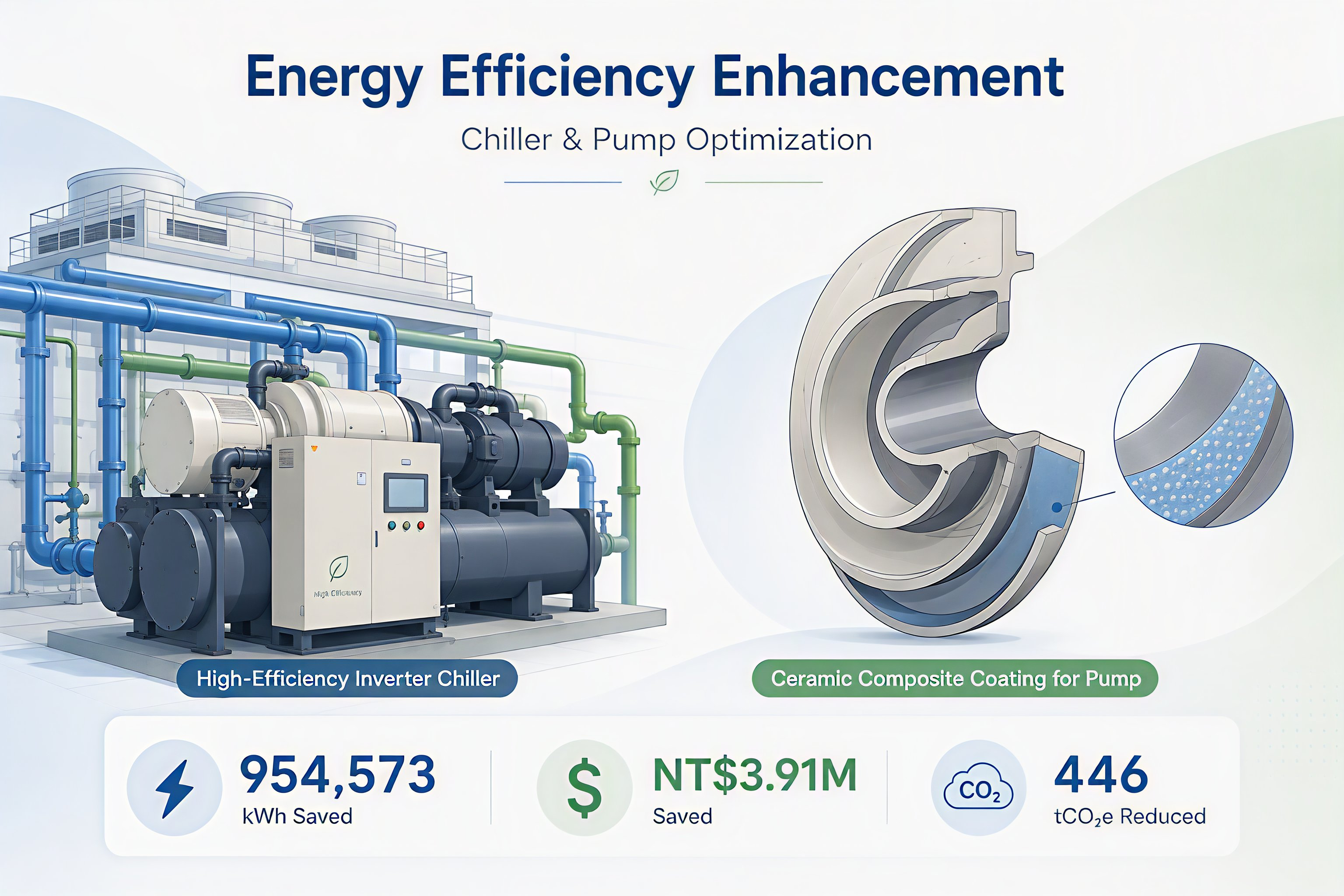
To enhance energy efficiency and align with the global trend toward low-carbon manufacturing, GlobalWafers continues to strengthen energy management across its manufacturing sites through equipment upgrades and technical improvements. Recently, the Taisil Branch implemented energy-saving initiatives for its chilled-water and cooling-water systems, including the installation of high-efficiency variable-speed chillers utilizing next-generation refrigerants and the refurbishment of existing pump flow passages using ceramic composite materials. These measures combine equipment modernization with performance optimization of existing assets, helping reduce electricity consumption and associated greenhouse gas emissions.
Deployment of High-Efficiency Variable-Speed Chillers with Next-Generation Refrigerants
The chilled water system is one of the major energy-consuming facilities within the site. To improve energy performance, the company replaced conventional fixed-speed chillers with high-efficiency variable-speed units equipped with next-generation refrigerants. In addition to enhancing operational efficiency, the project supports evolving international refrigerant management trends by phasing out equipment that utilized R-123 refrigerant. The upgrade delivers both energy-saving benefits and improved environmental performance.
Enhancing Pump Efficiency with Ceramic Composite Coating Technology
As semiconductor manufacturing facilities operate continuously around the clock, chilled water systems are subject to sustained high-load conditions. Over time, pump flow passages may experience erosion, cavitation, and corrosion, increasing surface roughness and resulting in greater friction losses and reduced operating efficiency.
To address these challenges, GlobalWafers introduced advanced ceramic composite coating technology for chilled water and cooling water pumps. By applying protective coatings and optimizing the internal flow passage surfaces, the solution reduces frictional resistance between the fluid and flow passages, thereby improving pump operating efficiency. The technology further enhances the performance of existing equipment while delivering energy-saving benefits and supporting the circular economy concept of “repair in place of replacement.”
Together, the two improvement initiatives deliver the following benefits:
- Energy savings: Approximately 954,573 kWh per year
- Cost savings: Approximately NT$3.91 million in annual electricity costs
- Carbon emissions reduction: Approximately 446 metric tons per year
- Improved equipment efficiency: Continued improvement in energy efficiency and equipment operating performance through the deployment of high-efficiency equipment and performance enhancements to existing equipment
Through equipment upgrades and technical optimization, these initiatives have improved energy efficiency and demonstrate GlobalWafers’ continued efforts to advance energy conservation, carbon reduction, and green manufacturing. Going forward, GlobalWafers will continue to pursue energy-efficiency improvements for chilled-water systems and evaluate opportunities to extend relevant technologies and improvement practices to other pump systems, further advancing green manufacturing and the transition toward low-carbon operations.